Global supply chains have never been more complex. A single shipment may involve manufacturers, suppliers, freight forwarders, customs authorities, ports, warehouses, insurance providers, financial institutions, and retailers spread across multiple countries. Despite significant advances in digital transformation, many logistics processes still rely on paper documents, manual verification, and fragmented communication.
These inefficiencies create unnecessary delays, increase operational costs, and expose businesses to errors and fraud.
Blockchain technology and smart contracts are changing this landscape. By automating agreements and enabling secure data sharing between trusted participants, organizations can build faster, more transparent, and highly efficient supply chains that operate with minimal manual intervention.
The future of logistics is not simply digital—it is autonomous.
Why Traditional Supply Chains Struggle
Even the most sophisticated logistics networks often depend on manual workflows.
Common documents include:
- Bills of lading
- Commercial invoices
- Certificates of origin
- Customs declarations
- Delivery confirmations
- Insurance certificates
- Warehouse receipts
These documents frequently pass through multiple organizations using different software systems.
As a result, businesses experience:
- Duplicate data entry
- Delayed approvals
- Lost documentation
- Human error
- Limited shipment visibility
- Slow payment processing
Every manual step increases both cost and operational risk.

What Are Smart Contracts?
A smart contract is a self-executing digital agreement stored on a blockchain.
Instead of requiring manual approval, the contract automatically performs predefined actions once specific conditions are met.
For example:
If:
- Goods arrive at the destination
- Delivery is confirmed
- Required documents are validated
Then:
- Payment is automatically released
- Inventory records are updated
- Ownership is transferred
- Notifications are sent to stakeholders
The rules are defined in advance, reducing delays and eliminating unnecessary administrative work.
Eliminating Paper from Logistics
Digital documentation combined with blockchain verification allows organizations to replace paper-based processes with trusted electronic records.
Important logistics events can be securely recorded, including:
- Shipment creation
- Container loading
- Customs inspections
- Border crossings
- Warehouse arrivals
- Delivery confirmation
- Quality inspections
- Payment authorization
Every authorized participant accesses the same verified information, reducing misunderstandings and document discrepancies.
Faster Customs Clearance
International trade often slows down because customs authorities must verify large volumes of documentation.
Blockchain enables customs agencies to access verified shipment information directly from a trusted digital ledger.
Benefits include:
- Faster document verification
- Reduced administrative workload
- Lower fraud risk
- Improved regulatory compliance
- Shorter border delays
By minimizing paperwork, goods move more efficiently through international checkpoints.
Automated Payments Based on Delivery Conditions
Traditional international payments often require manual confirmation before funds are released.
Smart contracts can automate this process.
For example, payment may be triggered only after:
- GPS data confirms arrival
- Warehouse staff verify receipt
- IoT sensors confirm proper temperature conditions
- Customs clearance is completed
- Quality inspections pass
Once every predefined condition has been satisfied, payment is executed automatically.
This improves cash flow while reducing payment disputes.
Integrating IoT with Blockchain
The Internet of Things (IoT) significantly expands the capabilities of smart contracts.
Connected sensors continuously monitor shipments by recording:
- Temperature
- Humidity
- Shock events
- Location
- Container opening
- Transit duration
This data is securely recorded and can automatically trigger contractual actions.
For example:
If refrigerated cargo exceeds its maximum temperature threshold, the system may immediately notify stakeholders, initiate an insurance claim, or suspend payment until inspection is completed.
Automation becomes both proactive and intelligent.
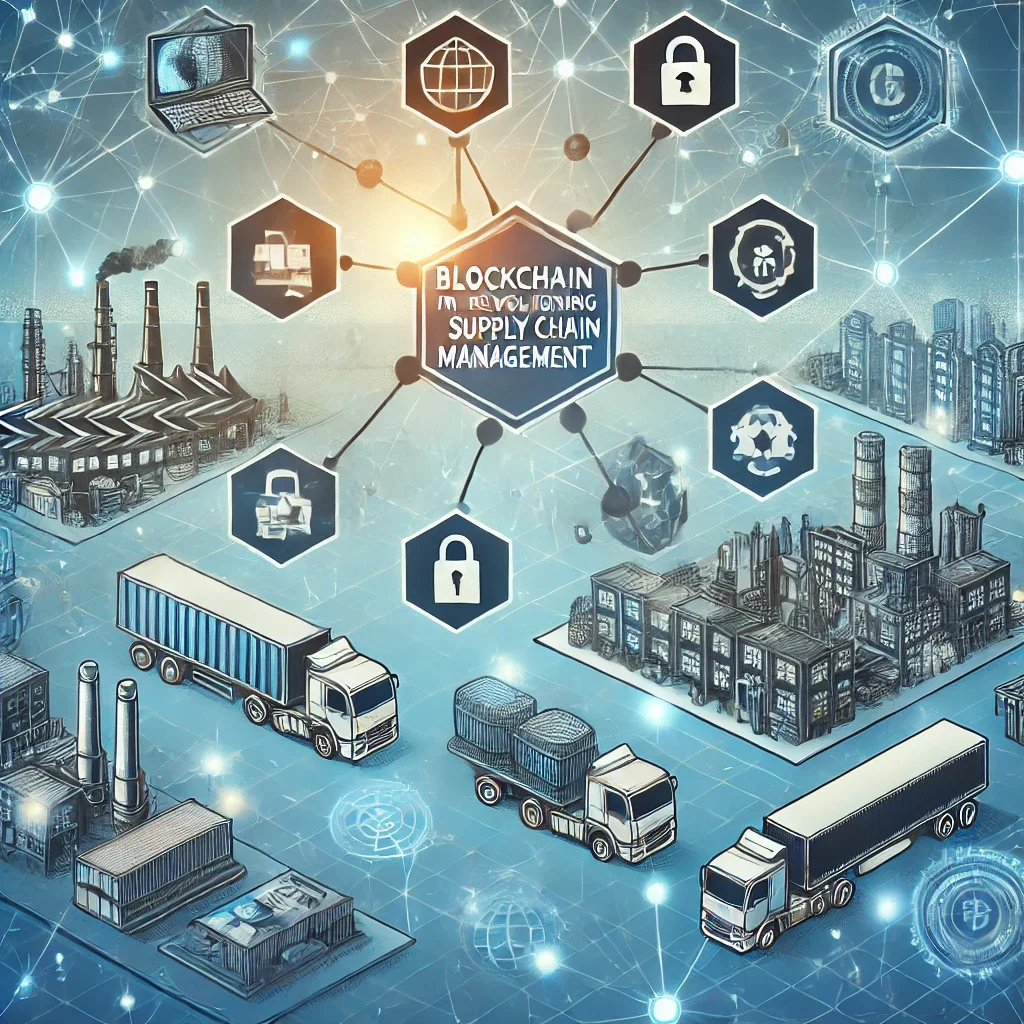
Greater Transparency Across the Supply Chain
One of blockchain’s greatest strengths is creating a shared source of truth.
Instead of maintaining separate databases, logistics partners access synchronized information regarding:
- Shipment status
- Documentation
- Ownership history
- Delivery milestones
- Payment progress
- Compliance records
Everyone works with the same verified information, reducing disputes and improving operational coordination.
Reducing Operational Costs
Manual logistics processes require significant administrative effort.
Automation reduces costs associated with:
- Document processing
- Data reconciliation
- Human error correction
- Payment administration
- Compliance verification
- Customer support inquiries
Organizations can redirect resources toward higher-value strategic activities rather than repetitive administrative tasks.
Smart Contracts Complement Existing Business Systems
Many organizations assume blockchain requires replacing their existing ERP or CRM platforms.
In reality, smart contracts are most valuable when integrated with established enterprise infrastructure.
Blockchain can exchange information with:
- ERP systems
- CRM platforms
- Warehouse management software
- Transportation management systems
- Financial platforms
- Inventory management solutions
Automation occurs behind the scenes while familiar business applications continue operating normally.
The Future of Intelligent Supply Chains
Global commerce continues to demand greater speed, transparency, and reliability.
Businesses are under increasing pressure to:
- Reduce operational costs
- Improve delivery performance
- Increase supply chain visibility
- Strengthen regulatory compliance
- Eliminate manual bottlenecks
Smart contracts address these challenges by creating trusted digital workflows that execute automatically when business conditions are satisfied.
Rather than replacing logistics professionals, automation allows them to focus on strategic planning, customer relationships, and operational optimization.
The supply chains of tomorrow will not simply move goods.
They will move information, trust, and value automatically.
Enterprise Integration Without Disruption
Our company develops enterprise blockchain solutions that integrate seamlessly with existing ERP, CRM, warehouse management, and logistics platforms, enabling organizations to automate complex supply chain processes without replacing their current infrastructure.
Our smart contract solutions are designed to support real-world business operations, from shipment tracking and customs workflows to automated payment execution and digital document verification. By connecting blockchain technology with established enterprise systems, businesses gain greater visibility, faster processing, and improved operational efficiency while maintaining compatibility with their existing technology ecosystem.
Whether supporting manufacturers, logistics providers, ports, or global distributors, our integration expertise helps organizations transform traditional supply chains into secure, intelligent, and paperless digital networks built for the future of international commerce.